flowchart TD
    User["User"] <--> UI["User\nInterface"]
    UI <--> IE["Inference\nEngine"]
    IE <--> KB["Knowledge Base\n(IF-THEN Rules)"]
    IE <--> WM["Working\nMemory\n(Facts)"]
    IE --> EF["Explanation\nFacility"]
    EF --> UI
    KE["Knowledge\nEngineer"] --> KB
Chapter 6: Symbolic AI’s Golden Age
Central Question: Can intelligence be captured in rules and symbols?
6.1 Expert Systems Rise
The neural networks are dead. Or so we are told.
After the publication of Minsky and Papert’s Perceptrons in 1969, after the Lighthill Report of 1973, after the collapse of funding that follows—neural network research becomes a professional liability. Graduate students are warned away. Grants dry up. The connectionist dream of brain-inspired intelligence sinks into what historians will later call the first AI winter.
But the winter is selective. While one paradigm freezes, another blooms.
We are now in the 1970s and 1980s, and symbolic AI—the approach that sees intelligence as the manipulation of symbols according to rules—enters its golden age. The physical symbol system hypothesis, articulated by Newell and Simon at Dartmouth, becomes orthodoxy. Intelligence is symbol manipulation. Thought is computation over discrete tokens. The brain is a kind of logic machine, and if we can just capture enough of the right rules, we can make machines think.
The commercial world begins to pay attention.
The breakthrough comes from an unexpected domain: the chemistry of organic molecules. At Stanford, a team led by Edward Feigenbaum and Joshua Lederberg (who will later win the Nobel Prize in Medicine) confronts a practical problem. Given the data from a mass spectrometer—a machine that smashes molecules apart and weighs the fragments—can a computer determine the molecular structure of an unknown compound?
This is DENDRAL, and it launches in 1965. The name comes from “dendritic algorithm,” referencing the tree-like structures it explores. But DENDRAL is not a generic reasoning system. It does not attempt to solve problems from first principles. Instead, it encodes the specific knowledge of expert chemists: their rules of thumb, their shortcuts, their hard-won intuitions about how molecules break apart.
A chemist looking at a mass spectrum does not reason from the fundamental physics of molecular bonds. She recognizes patterns. She knows that a peak at a certain mass-to-charge ratio suggests a particular functional group. She has heuristics—“if you see this pattern, suspect that structure.” DENDRAL captures these heuristics in explicit rules.
The results are impressive. DENDRAL can analyze spectra that stump graduate students. It can explore vast spaces of possible molecular structures systematically, pruning impossible candidates using the encoded expertise. It publishes scientific papers—or rather, papers are published with DENDRAL listed as a contributor.
The lesson Feigenbaum draws from DENDRAL will become his rallying cry: “Knowledge is power.” The key to intelligent systems is not some general-purpose reasoning engine, but rather the accumulation of domain-specific expertise. Intelligence, in this view, is less about the mechanism and more about the knowledge.
This insight spawns MYCIN, which begins in 1972 under the direction of Feigenbaum’s student Edward Shortliffe. MYCIN tackles a medical problem: diagnosing bacterial infections of the blood and recommending appropriate antibiotics. This is a domain where mistakes can be fatal. The wrong antibiotic fails to stop the infection. The right antibiotic given too late allows sepsis to set in. Time matters.
MYCIN encodes the diagnostic knowledge of infectious disease specialists in roughly 450 rules. Each rule has a specific form:
IF the patient has a fever AND the patient has low white blood cell count AND the site of infection is the blood THEN there is suggestive evidence (0.4) that the infection is bacterial
The numbers represent certainty factors—MYCIN’s way of handling the uncertainty inherent in medical diagnosis. Symptoms do not conclusively indicate diseases; they provide evidence, stronger or weaker. MYCIN combines evidence using a calculus of certainty factors, propagating confidence (or doubt) through chains of reasoning.
In 1979, researchers conduct a controlled study. MYCIN’s diagnostic recommendations are compared against those of infectious disease specialists at Stanford. The results are startling: MYCIN achieves 69% accuracy in recommending appropriate therapy, outperforming the 42.5% to 62.5% accuracy of the human doctors in the study.
The system that knows 450 rules is beating specialists who know… well, how much do they know? The question reveals something important. Human expertise is notoriously difficult to articulate. Ask a physician how she diagnoses an infection, and she will give you textbook descriptions. But her actual reasoning involves pattern recognition, intuition, and contextual judgments that she cannot easily put into words. The knowledge is there, but it is tacit, encoded in the neural wetware of experience.
MYCIN, for all its success, is never deployed clinically. Concerns about liability, about the role of computers in medicine, about explaining MYCIN’s reasoning to patients—all these conspire to keep it in the research lab. But its influence is enormous. It proves that expert knowledge can be captured, encoded, and deployed in silicon.
Feigenbaum becomes the prophet of what he calls “knowledge engineering.” The new profession is born: the knowledge engineer, who sits with human experts and extracts their rules, codifies their heuristics, builds the knowledge base that will drive the expert system.
By the early 1980s, expert systems are everywhere—or so it seems to the technology press. Companies spring up to commercialize the approach. Symbolics and Lisp Machines Inc. sell specialized computers optimized for running AI programs written in LISP, the language of choice for symbolic AI. These machines feature architectures designed from the ground up for symbolic manipulation: tagged data types, automatic garbage collection, specialized instruction sets.
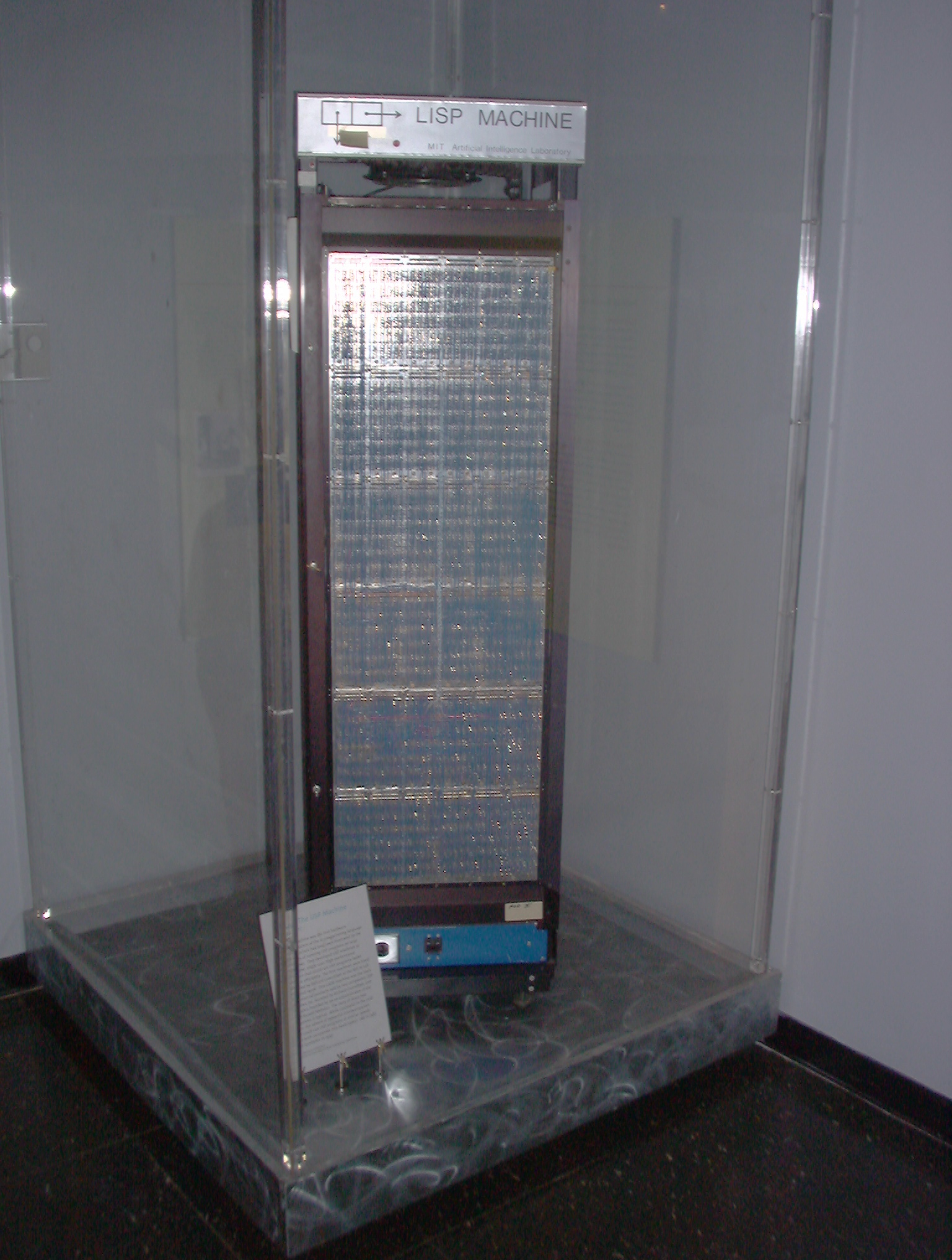
The money pours in. In 1980, Symbolics sells its first Lisp machine for about $70,000—roughly $250,000 in 2024 dollars. Banks buy them. Oil companies buy them. The Department of Defense buys them. Inference Corporation, founded in 1979, sells tools for building expert systems and reports revenues doubling every year. Texas Instruments enters the market. Xerox develops its own Lisp machines.
Industry analysts predict a massive market. Companies fear being left behind. If your competitor has an expert system that diagnoses equipment failures or configures complex products or evaluates loan applications, what happens to your business?
The promise is intoxicating: capture the expertise of your best employees in software. Clone your experts. When they retire, their knowledge does not walk out the door. When demand surges, you do not need to hire and train new specialists. The expert system works at the speed of silicon, never takes a vacation, never forgets a rule.
XCON (originally R1) at Digital Equipment Corporation becomes the poster child for commercial success. Starting in 1980, XCON configures VAX computer systems—a task so complex that DEC’s human configurators routinely make errors, leading to shipments of incompatible components and costly customer complaints. XCON encodes about 2,500 rules describing how VAX components fit together, what combinations are valid, what configurations are required for different customer needs.
By 1986, XCON processes 80,000 orders per year with 95-98% accuracy. DEC estimates annual savings of $25 million in reduced errors and faster order processing. The system has over 10,000 rules by the late 1980s, maintained by a team of knowledge engineers who continually update it as new VAX components are introduced.
The success stories multiply. Expert systems advise on geological exploration, helping oil companies decide where to drill. They diagnose malfunctions in locomotives and turbines. They evaluate insurance claims and credit applications. They configure products and schedule factories.
The business press takes notice. Fortune, Business Week, and Forbes run cover stories. Expert systems are the future of business. Knowledge is the new capital. We are entering the knowledge economy.
At conferences, at corporate retreats, at congressional hearings, the symbolic AI researchers make their case. Edward Feigenbaum testifies before Congress about American competitiveness in artificial intelligence. “Knowledge is power,” he repeats. “In the knowledge business, knowledge is the product.”
This is symbolic AI’s moment. The neural networks are dormant, their advocates scattered and unfunded. The statisticians have not yet demonstrated that learning from data can compete with carefully encoded rules. The connectionists huddle in quiet labs, keeping the flame alive but publishing little.
The future, it seems, belongs to rules and symbols.
6.2 Knowledge Representation
If intelligence is knowledge, then everything depends on how we represent what we know.
This turns out to be one of the hardest problems in AI. How do you encode the fact that birds fly—except penguins and ostriches and dead birds and birds with broken wings? How do you represent the knowledge that a chair is for sitting, but a fallen tree can serve as a chair, but a painting of a chair cannot? How do you capture the common sense that if you put a glass of water in a box and carry the box across the room, the water comes too?
We know these things. We never think about them. They are too obvious to mention. And precisely because they are obvious, they are almost impossible to articulate—and fiendishly difficult to encode for a machine.
The knowledge representation problem becomes central to symbolic AI, and several frameworks emerge to address it.
Marvin Minsky, the co-author of the perceptron critique, proposes an influential approach in his 1975 paper “A Framework for Representing Knowledge.” He calls his structures “frames”—stereotyped situations that organize our expectations.
Consider the concept “restaurant.” A frame for restaurant includes slots: type (fast food, fine dining, cafe), location, menu, price range, typical sequence of events (enter, be seated, read menu, order, eat, pay, leave). Each slot has default values—expectations that hold unless we learn otherwise. When we enter a restaurant, we expect to be seated. We expect a menu. We expect to pay at the end. These expectations are not always correct (some restaurants have no menus; some require payment upfront), but they provide a starting point for understanding.
Frames are hierarchical. The “fast food restaurant” frame inherits from “restaurant” but overrides certain defaults: no table service, no tipping, pay before eating. The “fancy French restaurant” frame inherits different defaults: reservations expected, extensive wine list, male diners expected to wear jackets.
The frame idea captures something important about human cognition. We do not approach each situation from scratch. We recognize situations as instances of familiar types and apply our accumulated expectations. When those expectations are violated, we notice and adjust.
Roger Schank, at Yale, develops a related idea he calls “scripts”—stereotyped sequences of events that capture our knowledge of how situations typically unfold. The canonical example is the restaurant script:
- Scene 1: Entering
- Customer enters restaurant
- Customer waits to be seated
- Host seats customer
- Customer receives menu
- Scene 2: Ordering
- Customer reads menu
- Waiter arrives
- Customer orders food
- Waiter brings food
- Scene 3: Eating
- Customer eats food
- [various possible events]
- Scene 4: Exiting
- Waiter brings check
- Customer pays
- Customer leaves
Scripts explain how we understand stories. Consider the sentence: “John went to a restaurant. He ordered a hamburger. He left a big tip.” We understand that John was seated, that a waiter took his order, that the hamburger was brought to him, that he ate it, that a check arrived, that he paid—even though none of these events are mentioned. The script fills in the gaps.
Schank builds systems that use scripts to understand stories, to answer questions about what happened, to draw inferences that require common-sense knowledge of how the world works. His SAM (Script Applier Mechanism) and later PAM (Plan Applier Mechanism) process natural language stories by matching them to known scripts and inferring the unstated events.
Semantic networks provide another approach. Here, knowledge is represented as a graph: concepts are nodes, and relationships are edges connecting them. “Canary” is connected to “bird” by an “is-a” link. “Bird” is connected to “animal” by another “is-a” link. “Bird” is connected to “fly” by a “can” link. “Canary” is connected to “yellow” by a “color” link.
flowchart TD
    Animal["Animal"] -- "has" --> Skin["Skin"]
    Animal -- "can" --> Move["Move"]
    Bird["Bird"] -- "is-a" --> Animal
    Bird -- "can" --> Fly["Fly"]
    Bird -- "has" --> Feathers["Feathers"]
    Canary["Canary"] -- "is-a" --> Bird
    Canary -- "color" --> Yellow["Yellow"]
    Canary -- "can" --> Sing["Sing"]
    Penguin["Penguin"] -- "is-a" --> Bird
    Penguin -- "cannot" --> Fly
    Penguin -- "can" --> Swim["Swim"]
Inheritance flows through the network. If we ask “Can a canary fly?” we follow the “is-a” link from canary to bird and find the “can fly” property. The answer is yes. This works elegantly for typical cases and captures the intuition that knowledge is organized hierarchically.
But reality is messy. “Can a penguin fly?” Following the same logic—penguin is-a bird, bird can fly—we get the wrong answer. We need exceptions. We need defaults that can be overridden. We need to represent that birds typically fly, but specific birds may not. The simple elegance of semantic networks becomes complicated as we try to handle the actual texture of human knowledge.
The most ambitious attempt to encode human knowledge is Douglas Lenat’s CYC project, which begins in 1984 at Microelectronics and Computer Technology Corporation (MCC) in Austin, Texas. Lenat, already famous for his automated mathematician program (AM) and its successor EURISKO, sets himself a staggering goal: encode all of human common-sense knowledge in a form computers can use.
The reasoning is straightforward. Expert systems fail outside their narrow domains because they lack common sense. MYCIN knows about bacterial infections but does not know that patients are people, that people can die, that death is bad, that doctors want to help patients. This missing knowledge seems trivially obvious to humans. But it is exactly this trivially obvious knowledge that expert systems lack.
Lenat’s solution is brute force: hand-code millions of assertions about the world, building a knowledge base so comprehensive that a reasoning system could draw on it for any task.
The CYC team (the name is short for “encyclopedia”) begins with the simple things. Water is wet. Fire is hot. People have heads. Heads contain brains. When you drop a glass, it falls. When a glass hits the floor, it may break. Broken glass is sharp. Sharp things can cut you. If you are cut, you bleed.
Each assertion is linked to others. Collections are defined: “physical objects,” “events,” “people,” “tools.” Properties are inherited through the hierarchy. Rules capture general patterns: “If X is inside Y, and Y is moved, then X is moved.”
Progress is slower than anyone expects. By 1990, after six years of work, CYC contains about 1 million assertions. By 2024, it holds several million. But “complete” common-sense knowledge remains elusive.
The problem is not the number of facts. The problem is the interconnection, the context-dependence, the subtle gradations of what counts as knowledge.
Consider: “You can’t see from inside a car.” Is this true? Obviously not—you can see through the windows. But: “You can’t see through the roof of a car.” True for most cars. But not for cars with sunroofs. And even with a sunroof, you cannot see through the roof if the sunroof shade is closed. Unless the shade is transparent…
The CYC team calls this the “knowledge acquisition bottleneck.” The more you encode, the more you realize you are missing. Every assertion reveals ten more that need to be made. Every exception spawns further exceptions. The project becomes, in Lenat’s own words, “like painting a bridge that’s long enough to rust at the starting point before you reach the end.”
There is a deeper problem still, one that philosophers of AI call the “frame problem.” It emerges clearly when we try to model change in the world.
Suppose we have a knowledge base describing the current state of a room: there is a table, there is a cup on the table, there is water in the cup. Now we perform an action: we move the table. What changes?
Obviously, the table’s location changes. But does the cup move? Common sense says yes—the cup was on the table, and when the table moves, the cup moves with it. Does the water move? Yes, the water was in the cup. Does the color of the cup change? No. Does the weight of the table change? No. Does the fact that 2 + 2 = 4 change? No.
For every action, infinitely many things do not change. How do we represent this? We cannot list everything that stays the same—the list is infinite. We cannot say “everything stays the same except what we explicitly change”—because sometimes actions have implicit consequences (moving the table moves the cup).
The frame problem, in its technical sense, is about how to efficiently represent and reason about change without enumerating every non-effect of every action. But it points to something deeper: the sheer density of common-sense reasoning, the way everything connects to everything else, the difficulty of capturing in discrete rules the fluid, contextual, implicit knowledge that humans use effortlessly.
These are not engineering problems that will yield to more effort. They suggest something fundamental about the nature of knowledge—that it may not be decomposable into neat symbolic structures, that intelligence may require something other than rules.
But in the 1980s, these worries are minority concerns. The expert systems are working. The funding is flowing. Knowledge engineering is a booming profession.
Until it isn’t.
6.3 The Second Winter
The end comes quickly.
In 1984, the American Association for Artificial Intelligence holds its national conference in Austin, Texas. Attendance is booming. Venture capital is plentiful. The exhibitor hall is packed with companies selling expert system shells, Lisp machines, knowledge engineering tools. The future is symbolic, and the future is now.
By 1990, it is winter again.
What happened?
The first problem is technical: expert systems are brittle. They work brilliantly within their programmed domains and fail catastrophically outside them. XCON can configure VAX systems but cannot handle the simplest questions about why it made its choices. MYCIN can diagnose blood infections but does not know that patients are human beings who might have opinions about their treatment.
This brittleness stems from the knowledge representation problem we have already explored. Expert systems lack common sense. They lack the ability to reason by analogy, to recognize when they are outside their competence, to degrade gracefully. When they fail, they fail completely and often confidently—producing nonsense with the same certainty they produce correct answers.
The commercial expert systems, deployed with fanfare in the early 1980s, begin to disappoint. Maintenance costs escalate as the knowledge base grows. The rules interact in unexpected ways. Updating the system for new situations requires constant knowledge engineering effort. The dream of “clone your expert”—capture knowledge once, deploy forever—collides with the reality of organizational change, evolving business processes, shifting markets.
The second problem is economic: the hardware market collapses. The specialized Lisp machines, so promising in 1980, become victims of their own success—or rather, victims of the success of general-purpose computing. By the late 1980s, workstations from Sun Microsystems and others deliver comparable performance for symbolic AI applications at a fraction of the cost. The expensive Lisp machines with their specialized architectures cannot compete against commodity hardware.
Symbolics, the leading Lisp machine company, peaks in revenue around 1988 and then begins a long decline. By 1993, it is in bankruptcy. The other Lisp machine vendors fare no better. Billions of dollars in market value evaporate.
The third blow comes from Japan. In 1982, the Japanese Ministry of International Trade and Industry (MITI) announces the Fifth Generation Computer Systems project—a ten-year, $850 million program to develop revolutionary “knowledge information processing systems.” The goal is nothing less than to leapfrog American computing, to build machines that can reason, understand natural language, and achieve artificial intelligence.
The announcement sends shockwaves through the American technology establishment. Japan had already conquered memory chips and consumer electronics. Would they now conquer AI? In response, the United States launches the Strategic Computing Initiative, an aggressive Defense Department program to accelerate AI research.
The Fifth Generation project focuses on Prolog, a logic programming language, as its software foundation. It develops parallel computing architectures optimized for logical inference. It attacks natural language processing, speech recognition, and knowledge-based reasoning.
By 1992, when the project officially ends, it is widely considered a failure. The parallel Prolog machines never achieve the hoped-for performance. The natural language systems struggle with the same knowledge representation problems that bedevil everyone. The dream of “thinking machines” recedes.
The Fifth Generation’s failure becomes a symbol. If massive government funding, top researchers, and a decade of concentrated effort cannot achieve symbolic AI’s goals, perhaps those goals are unachievable—at least with current approaches.
In the United States, the DARPA funding that had sustained academic AI research begins to dry up. The agency shifts priorities. The expert system companies that had promised revolution deliver merely incremental improvements. The stock market, having bid up AI companies to unsustainable valuations, reverses course.
By the late 1980s, the term “artificial intelligence” becomes almost unspeakable in business contexts. Companies rebrand their products as “knowledge systems” or “decision support” or “business rules engines”—anything but AI. Researchers avoid the phrase in grant proposals.
The AI winter has returned, and this time it is deeper and longer.
The symbolic AI era leaves a complicated legacy.
On one hand, it represents a kind of failure. The dream of capturing intelligence in rules and symbols—the physical symbol system hypothesis in its strongest form—does not succeed. Expert systems do not scale to general intelligence. Knowledge engineering cannot keep pace with the complexity of the real world. The frame problem and the knowledge acquisition bottleneck prove to be fundamental obstacles, not mere engineering challenges.
On the other hand, the ideas do not die. They evolve.
The semantic networks of the 1970s become the ontologies and knowledge graphs of today. When Google answers a query about a famous person by displaying a structured card with birth date, occupation, spouse, and related people—that is a knowledge graph, a direct descendant of symbolic AI’s semantic networks. The Resource Description Framework (RDF) and the Web Ontology Language (OWL) that underpin the Semantic Web draw explicitly on this tradition.
The rule-based reasoning of expert systems persists in business rules engines, in the tax preparation software that navigates the labyrinthine complexity of the tax code, in the clinical decision support systems embedded in electronic medical records. These are expert systems, even if no one calls them that anymore.
And the deep questions that symbolic AI raised—how do you represent knowledge? how do you reason under uncertainty? how do you handle the frame problem?—remain central to AI research. The modern systems that combine neural networks with structured knowledge representations, that use language models to interface with knowledge bases, that attempt to give machine learning systems access to symbolic reasoning—these are grappling with the same problems, using different tools.
Perhaps most importantly, symbolic AI establishes a crucial insight: knowledge matters. The systems that work best on real problems are those that combine learning with structured knowledge, that leverage what is already known rather than learning everything from scratch.
The neural networks that seemed dead in 1969 are about to rise again, and when they do, they will eventually incorporate ideas from symbolic AI—knowledge graphs, structured representations, explicit reasoning. The synthesis of symbolic and connectionist approaches, a dream that has flickered for decades, remains an active frontier of research.
But we are getting ahead of ourselves. The second AI winter is bitter, but it is not total. In hidden corners, in quiet labs, researchers are keeping alternative approaches alive. Neural networks survive, barely. New paradigms emerge: evolutionary computation, probabilistic reasoning, embodied AI. The monopoly of symbolic AI is broken, even if its successor is not yet clear.
The late 1980s and early 1990s are a time of ferment, of competing visions, of alternative paths. The era of symbolic AI’s dominance is over. What comes next is still being born.
And in a few years, a quiet revolution will begin—one that starts not with knowledge but with data, not with rules but with learning, not with symbols but with numbers. The statistical turn is coming.
Next: Chapter 7 - Alternative Paths
Chapter Notes
Key Figures
- Edward Feigenbaum (1936-): Pioneer of expert systems; coined “knowledge engineering”
- Douglas Lenat (1950-2023): Creator of CYC; decades-long quest for common sense AI
- Marvin Minsky (1927-2016): Frame theory; continued influence on knowledge representation
- Roger Schank (1946-2023): Script theory; natural language understanding
Primary Sources to Reference
- Feigenbaum, E. A. (1977). “The Art of Artificial Intelligence: Themes and Case Studies of Knowledge Engineering”
- Buchanan, B. G., & Shortliffe, E. H. (Eds.). (1984). Rule-Based Expert Systems: The MYCIN Experiments
- Minsky, M. (1975). “A Framework for Representing Knowledge”
- Lenat, D. B., & Guha, R. V. (1990). Building Large Knowledge-Based Systems
- Schank, R. C., & Abelson, R. P. (1977). Scripts, Plans, Goals and Understanding