flowchart TD
    I["Interrogator"] -- "typed\nquestions" --> Screen["Terminal\n(text only)"]
    Screen -- "responses" --> I
    Screen <--> H["Human"]
    Screen <--> M["Machine"]
    H ~~~ M
Chapter 4: Can Machines Think?
Central Question: How do we even define machine intelligence?
We stand now at a threshold. The previous chapters have traced the deep roots of computation: Babbage’s mechanical dreams, Turing’s theoretical revolution, Shannon’s information theory, and the McCulloch-Pitts neuron that first suggested thinking might be formalized. These were foundational insights, but they remained largely abstract. The machines that existed were tools for calculation, not candidates for intelligence.
Now something changes. In the years following World War II, a small group of visionaries begins to ask a dangerous question directly: Can we build machines that think? Not machines that merely calculate, but machines that reason, learn, and perhaps even understand. This question marks the birth of artificial intelligence as an explicit pursuit, and the answers proposed in this era will shape debates that continue to this day.
4.1 Turing’s Imitation Game
It is 1950, and Alan Turing finds himself in an unusual position. Five years have passed since the end of the war, since Bletchley Park and the breaking of Enigma. The secrecy surrounding his wartime work means the world knows little of his contributions. He has moved to the University of Manchester, where one of the first stored-program computers, the Manchester Mark 1, hums with electronic life. Turing has been programming this machine, exploring its capabilities, and thinking deeply about what such capabilities might ultimately mean.
The abstract Turing machine of 1936 was a thought experiment, a mathematical formalism designed to answer Hilbert’s Entscheidungsproblem. But now Turing confronts actual machines, physical devices that execute instructions at speeds no human can match. The theoretical has become practical. And with this transformation comes a question that Turing cannot resist: What are the limits of what these machines might do? Might they, someday, think?
In October 1950, the philosophical journal Mind publishes Turing’s paper “Computing Machinery and Intelligence.” It opens with a sentence that has echoed through seven decades of debate: “I propose to consider the question, ‘Can machines think?’”
But Turing immediately performs a rhetorical pivot that reveals his philosophical sophistication. He recognizes that the question as stated is nearly meaningless. What do we mean by “machine”? What do we mean by “think”? These terms are so loaded with ambiguity and assumption that any direct answer would collapse into semantic confusion. Rather than wade into this definitional swamp, Turing proposes we replace the question with something more tractable.
He introduces what he calls the “imitation game,” and what posterity will name the Turing Test.
Picture the setup. There is an interrogator, seated alone in a room with a teleprinter. The interrogator can send typed messages to two other participants, hidden from view, and receive typed responses in return. One of these participants is a human being. The other is a machine. The interrogator’s task is simple to state but potentially profound in implication: through conversation alone, determine which respondent is human and which is machine.
If the machine can consistently fool interrogators, if its responses are indistinguishable from those of a human, then what grounds remain for denying it the attribute of thinking? Turing’s move is operationalist. He does not attempt to define thinking in terms of some inner essence or metaphysical property. Instead, he defines it through behavior, through externally observable performance. A machine that behaves intelligently, in circumstances where intelligence is the natural explanation for such behavior, should be granted the label.
The elegance of this proposal lies in its simplicity and its challenge to essentialist thinking. We cannot peer inside another human’s mind to verify the presence of thought. We infer mental states from behavior, from language, from responsiveness to context. Turing asks: Why should we demand more from machines than we demand from each other?
Having proposed his test, Turing spends the remainder of his paper anticipating objections. His catalog reads like a tour of the concerns that will occupy philosophy of mind for generations.
The theological objection holds that thinking is a function of the immortal soul, which God has granted only to humans. Turing’s response is wry: he sees no reason why God could not grant souls to machines if He chose, and notes that the theological argument proves too much, since it would equally imply that God could never have created beings capable of thought through biological evolution.
The mathematical objection draws on Godel’s incompleteness theorems to argue that machines, being formal systems, must have inherent limitations that human minds escape. Turing grants the point about formal systems but denies the implied human supremacy. There is no evidence, he observes, that humans can answer all the questions that stump machines. We too have our limits.
The argument from consciousness asserts that unless a machine genuinely feels and experiences, it cannot truly think. Turing calls this the “solipsist” position and notes its awkward implications: taken seriously, it would mean that only oneself can be credited with thought, since we can never access another’s inner experience. We extend charitable attribution of consciousness to other humans; Turing suggests the same courtesy might eventually be owed to machines.
Then there is what Turing calls Lady Lovelace’s objection, named for Ada Lovelace’s observation that the Analytical Engine “has no pretensions to originate anything. It can do whatever we know how to order it to perform.” Machines, on this view, can only do what they are programmed to do; they cannot surprise us. Turing’s response is pointed: machines frequently surprise their creators. Programming is not prophecy. The complexity of actual machine behavior often exceeds what programmers anticipate. And even if machines only follow rules, it is not clear that humans do anything fundamentally different.
Turing addresses several more objections, but what unites his responses is a consistent methodological move. He deflects claims about what machines cannot in principle do by pointing to the lack of evidence that humans are relevantly different. The burden of proof, he suggests, lies with those who would draw categorical distinctions between biological and artificial systems.
The paper concludes with a prediction. Within fifty years, Turing suggests, it will be possible to program computers to play the imitation game so well that an average interrogator will have no better than a 70% chance of correct identification after five minutes of questioning. His specific numbers have been debated endlessly, but the general prediction captures Turing’s optimism about the field he was helping to birth.
The Turing Test has proven remarkably durable as a touchstone for debate, even as its adequacy has been questioned. Decades later, the philosopher John Searle will construct his famous “Chinese Room” thought experiment to argue that passing the Turing Test does not demonstrate genuine understanding. Searle imagines himself locked in a room, manipulating Chinese symbols according to a rulebook, producing appropriate outputs without understanding a word of Chinese. The argument remains controversial, but it illuminates a persistent concern: Is behavioral equivalence enough, or does intelligence require something more?
Turing himself seems to have recognized that his test was a provocation rather than a final answer. He was not primarily interested in philosophical debates about the nature of mind. He wanted to shift the conversation from metaphysical speculation to empirical investigation. “Instead of arguing continually over this point,” he wrote, “it is usual to have the polite convention that everyone thinks.” Perhaps the same convention should extend to machines that pass appropriate tests.
The imitation game was an invitation to build and experiment rather than merely philosophize. It would take a few more years for that invitation to crystallize into a research program. But when it did, Turing’s question would be written on its banner.
4.2 The Dartmouth Summer
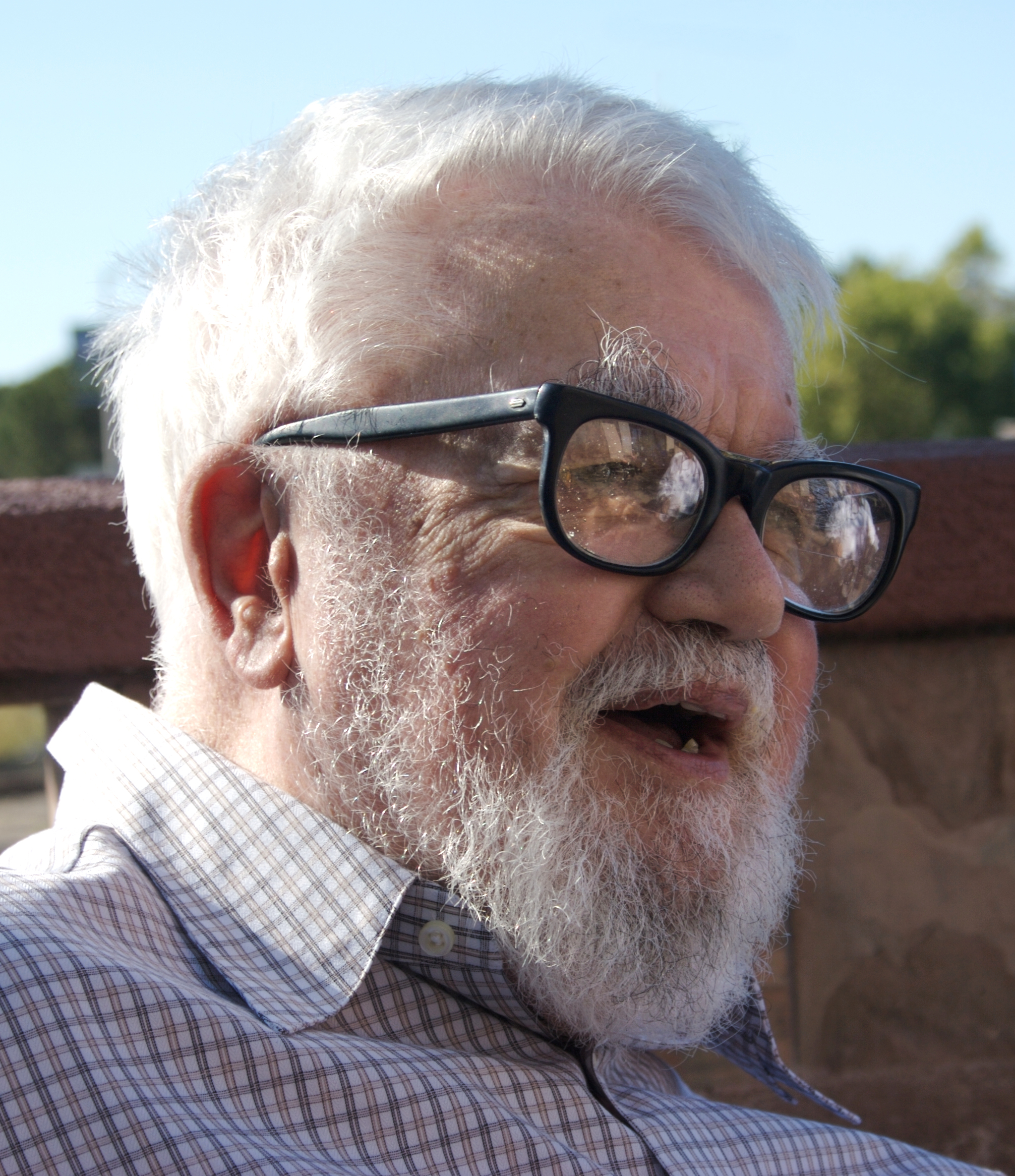
The year is 1955, and a young mathematician named John McCarthy is drafting a proposal. McCarthy, then an assistant professor at Dartmouth College, has been thinking about thinking. He has been corresponding with others who share his conviction that the time has come to assault the problem of intelligence directly. The proposal he is writing will, in one compact document, name a field and launch an era.
McCarthy’s co-conspirators are a remarkable group. Marvin Minsky, recently completed with his doctorate at Princeton, where his thesis explored neural network computation. Nathaniel Rochester, a senior engineer at IBM who had led the team designing the company’s first scientific computer and was now experimenting with neural modeling. And Claude Shannon, the father of information theory, whose mathematical frameworks had revolutionized our understanding of communication itself.
Together, these four compose a proposal to the Rockefeller Foundation for a summer research project. The opening paragraph contains perhaps the most audacious sentence in the history of the field:
“We propose that a 2 month, 10 man study of artificial intelligence be carried out during the summer of 1956 at Dartmouth College in Hanover, New Hampshire. The study is to proceed on the basis of the conjecture that every aspect of learning or any other feature of intelligence can in principle be so precisely described that a machine can be made to simulate it.”
Pause to appreciate what is being claimed. Every aspect of learning. Any feature of intelligence. In principle. The confidence is breathtaking. These are not tentative researchers hedging their bets. They believe that intelligence, that mysterious quality that defines our species’ self-image, can be captured, formalized, and reproduced in silicon and vacuum tubes.
The proposal continues by listing the specific problems the summer project would address: automatic computers, programming languages, neural networks, self-improvement, abstractions, randomness and creativity. The scope is vast, the timeline absurd. They thought significant progress on fundamental problems of intelligence could be made in a single summer with ten researchers.
In retrospect, this optimism borders on the comical. But it was not naive optimism; it was the optimism of pioneers who could not yet see the mountains behind the foothills. The digital computer was barely a decade old as a practical technology. These were men who had watched the impossible become routine. If machines could solve differential equations, compose music, and play chess (primitively), why not push further? What principled barrier stood between calculation and cognition?
The summer of 1956 arrives, and the conference convenes. But the reality proves less dramatic than the proposal suggested. Rather than a concentrated assault on intelligence, the Dartmouth Summer is something closer to an extended working session, a gathering of researchers who drift in and out over the weeks, present their current projects, debate approaches, and return to their home institutions. There are no eureka moments, no manifestos signed on the final day.
Yet something crucial does happen. A community forms. Researchers who had been working in isolation discover kindred spirits. Terminologies begin to converge. And a name takes hold. McCarthy had insisted on the term “artificial intelligence” over alternatives like “automata studies” or “complex information processing.” The name is deliberately provocative. It claims territory. It asserts ambition.
The cast of characters who pass through Hanover that summer reads like a who’s who of the field’s founders. Allen Newell and Herbert Simon, who will later win the Nobel Prize in Economics (and would have won the Turing Award had it existed then), bring their Logic Theorist program, a genuine achievement that we will discuss shortly. Ray Solomonoff introduces ideas about machine learning and inductive inference. Arthur Samuel demonstrates his checkers-playing program, one of the first to genuinely learn from experience.
The conversations are eclectic, ranging from how to represent knowledge in machines to whether creativity can be computed. There are disagreements about method. Some favor logic and symbolic manipulation; others are more interested in neural networks and learning. These disagreements will later harden into camps and schools, but in 1956 the field is too young for tribalism.
What emerges from Dartmouth is not a unified theory but a unified ambition. The participants leave with a shared conviction that the problem of machine intelligence is tractable and important, that it deserves sustained research attention, and that the time to begin is now. Funding begins to flow. Graduate students are recruited. Laboratories are established at MIT, Carnegie Mellon, Stanford, and elsewhere.
The Dartmouth Summer does not solve the problem of artificial intelligence. It does something more important: it establishes artificial intelligence as a legitimate field of scientific inquiry. The questions Turing raised philosophically become research programs. The optimism of the proposal becomes the fuel for a generation of work.
That optimism, we should note, was not unjustified at the time. The researchers had achieved real results. Programs could prove theorems, play games, and manipulate symbols in ways that seemed to require intelligence. If such progress could be made so quickly, why assume the remaining problems were insurmountably harder? The AI pioneers extrapolated from early successes to future triumphs. They were wrong about the timeline, but we should not mock their optimism. They were, after all, inventing the future.
4.3 Early Visions
The Logic Theorist arrives at Dartmouth already proven in battle. Developed by Allen Newell, J.C. Shaw, and Herbert Simon at the RAND Corporation and Carnegie Institute of Technology, this program does something remarkable: it proves theorems in propositional logic, specifically theorems from Russell and Whitehead’s monumental Principia Mathematica.
Consider what this means. The Principia was a decades-long effort by two of the greatest logicians of the early twentieth century to derive all of mathematics from pure logic. Its proofs are intricate, demanding, and by any ordinary standard require intelligence to produce. Yet here is a machine that, given the axioms and rules of inference, discovers proofs on its own. The Logic Theorist does not merely verify that a proof is correct; it constructs proofs from scratch.
The program proves 38 of the first 52 theorems in Chapter 2 of the Principia. For one theorem, 2.85, it finds a proof more elegant than the one Russell and Whitehead had published. Simon and Newell, delighted by this result, write to Bertrand Russell describing the discovery. Russell, by then in his eighties, replies with what one imagines as bemused interest.
The Logic Theorist works by heuristic search. It does not blindly enumerate all possible proof steps; such enumeration would quickly become computationally intractable. Instead, it employs strategies, rules of thumb that guide its search toward promising paths. It works backward from the theorem to be proved, seeking intermediate results that might connect to known axioms. It substitutes and transforms expressions, hunting for patterns. The heuristics do not guarantee success, but they make success possible within reasonable time.
For Newell and Simon, the Logic Theorist is more than a theorem prover. It is a proof of concept for a much grander claim. If a machine can prove mathematical theorems, if it can do what seems paradigmatically to require thought, then perhaps the mechanisms underlying all intelligent behavior might be captured computationally. The Logic Theorist is the first step toward a general theory of mind.
This ambition leads to the General Problem Solver (GPS), developed by Newell and Simon in the years following Dartmouth. GPS is designed not to solve one particular type of problem but to be a general-purpose reasoning engine applicable across domains. The key insight is means-ends analysis: compare your current state to your goal state, identify the differences, and apply operators that reduce those differences.
Consider a simple example. You are in your living room and want coffee. Current state: living room, no coffee. Goal state: living room, with coffee. Difference: lacking coffee. Operation to reduce difference: go to kitchen and make coffee. But wait, this operation has preconditions: you must be in the kitchen to use the coffee maker. New subgoal: get to the kitchen. Current state: living room. Goal state: kitchen. Operation: walk from living room to kitchen. This recursion continues until all subgoals can be achieved directly.
flowchart TD
    Start["Current State"] --> Diff{"Identify\nDifference"}
    Diff --> Op["Select Operator\nto Reduce Difference"]
    Op --> Pre{"Preconditions\nMet?"}
    Pre -- "Yes" --> Apply["Apply Operator"]
    Apply --> Check{"Goal\nReached?"}
    Check -- "No" --> Diff
    Check -- "Yes" --> Done["Done"]
    Pre -- "No" --> Sub["Create Subgoal:\nAchieve Preconditions"]
    Sub --> Diff
GPS implements this reasoning pattern. Given a formal representation of problems in terms of states, goals, and operators, it performs means-ends analysis to find solution paths. Newell and Simon demonstrate GPS on diverse problems: proving theorems, solving puzzles, even performing simple planning tasks. The generality is striking. A single architecture handles problems that seem superficially quite different.
The success of GPS and the Logic Theorist leads Newell and Simon to articulate what they call the Physical Symbol System Hypothesis. This hypothesis, proposed formally in their 1976 Turing Award lecture, states: “A physical symbol system has the necessary and sufficient means for general intelligent action.”
Unpack this claim carefully. A physical symbol system is a machine that manipulates symbols according to rules. Symbols are physical patterns that represent things: objects, concepts, relationships. “Necessary” means that anything exhibiting general intelligence must be a symbol system. “Sufficient” means that any symbol system of sufficient power will exhibit general intelligence.
The hypothesis is audacious. It asserts that symbol manipulation is not merely one way to achieve intelligence but the only way, and a guaranteed way at that. Intelligence, on this view, is fundamentally about representing the world in symbolic structures and manipulating those structures according to formal rules. The brain itself, they suggest, is a symbol-processing system; its neurons implement symbolic computation.
This is the creed of what will become known as “Good Old-Fashioned AI” or GOFAI, the symbolic approach that will dominate the field for decades. Programs like GPS, expert systems, and knowledge representation frameworks all flow from this fundamental commitment. Intelligence is symbol manipulation; to build intelligence, we must build symbol processors.
But even in this early moment, alternative visions flicker at the periphery. Rosenblatt’s perceptron, which we will examine in the next chapter, takes a different path. Rather than programming explicit rules, the perceptron learns from examples. Rather than manipulating discrete symbols, it adjusts continuous weights. The tension between symbolic and subsymbolic approaches, between programmed knowledge and learned patterns, will define the field’s internal debates for decades.
For now, though, the symbolic vision holds the field’s center. The successes are real, the progress palpable. Herbert Simon, never one for understated claims, makes a prediction in 1957: within ten years, a computer will be world chess champion. The prediction is wrong by a factor of four, but the confidence is telling. Simon sees chess as a problem of heuristic search, of evaluating positions and planning moves. The Logic Theorist already searches; GPS already plans. Why should chess be fundamentally different?
The early AI researchers are victims of a seductive fallacy. They assume that problems humans find difficult, like proving theorems or playing chess, are the hard problems, and that problems humans find easy, like recognizing faces or understanding sentences, must be easier. They have it backwards. The “easy” problems, the ones we solve effortlessly and unconsciously, are precisely the ones that prove most resistant to symbolic formalization. This insight, which Hans Moravec will later articulate as Moravec’s Paradox, lies in the future. For now, the symbolic edifice rises confidently.
As the 1950s close, artificial intelligence has established itself as a field. It has a name, thanks to McCarthy. It has a philosophical foundation, thanks to Turing. It has working programs that prove theorems and solve problems. It has a theoretical framework in the Physical Symbol System Hypothesis. It has funding, laboratories, and graduate students.
It also has unbounded optimism. Machines will be chess champions within a decade. Machines will match human intelligence within a generation. The problems are hard but tractable; the methods are sound; the progress is undeniable.
The winters are coming, but no one sees them yet. The field marches forward, symbols held high, ready to capture intelligence in formal structures. That some of this confidence will prove misplaced, that the journey will be longer and stranger than anyone imagines, takes nothing away from the boldness of the beginning. These researchers asked whether machines could think and refused to accept that the question was unanswerable. They proposed tests, built programs, and formulated hypotheses. They were, in the deepest sense, scientists.
We will follow their journey through the triumphs and setbacks ahead. The perceptron awaits, with its promise and its limitations. The winters will teach hard lessons about hype and humility. But the fire lit at Dartmouth never quite goes out. The question Turing posed, the ambition McCarthy named, the programs Newell and Simon built, all these seeds will germinate across decades until, in ways none of them foresaw, machines will begin to do things that look very much like thinking indeed.
Chapter Notes
Key Figures
- Alan Turing (1912-1954)
- John McCarthy (1927-2011)
- Marvin Minsky (1927-2016)
- Claude Shannon (1916-2001)
- Allen Newell (1927-1992)
- Herbert Simon (1916-2001)
- J.C. Shaw (1922-1991)
- Nathaniel Rochester (1919-2001)
Primary Sources to Reference
- Turing, A.M. (1950). “Computing Machinery and Intelligence.” Mind, 59(236), 433-460.
- McCarthy, J., Minsky, M., Rochester, N., & Shannon, C. (1955). “A Proposal for the Dartmouth Summer Research Project on Artificial Intelligence.”
- Newell, A., & Simon, H.A. (1956). “The Logic Theory Machine: A Complex Information Processing System.” IRE Transactions on Information Theory, 2(3), 61-79.
- Newell, A., & Simon, H.A. (1976). “Computer Science as Empirical Inquiry: Symbols and Search.” Communications of the ACM, 19(3), 113-126.